

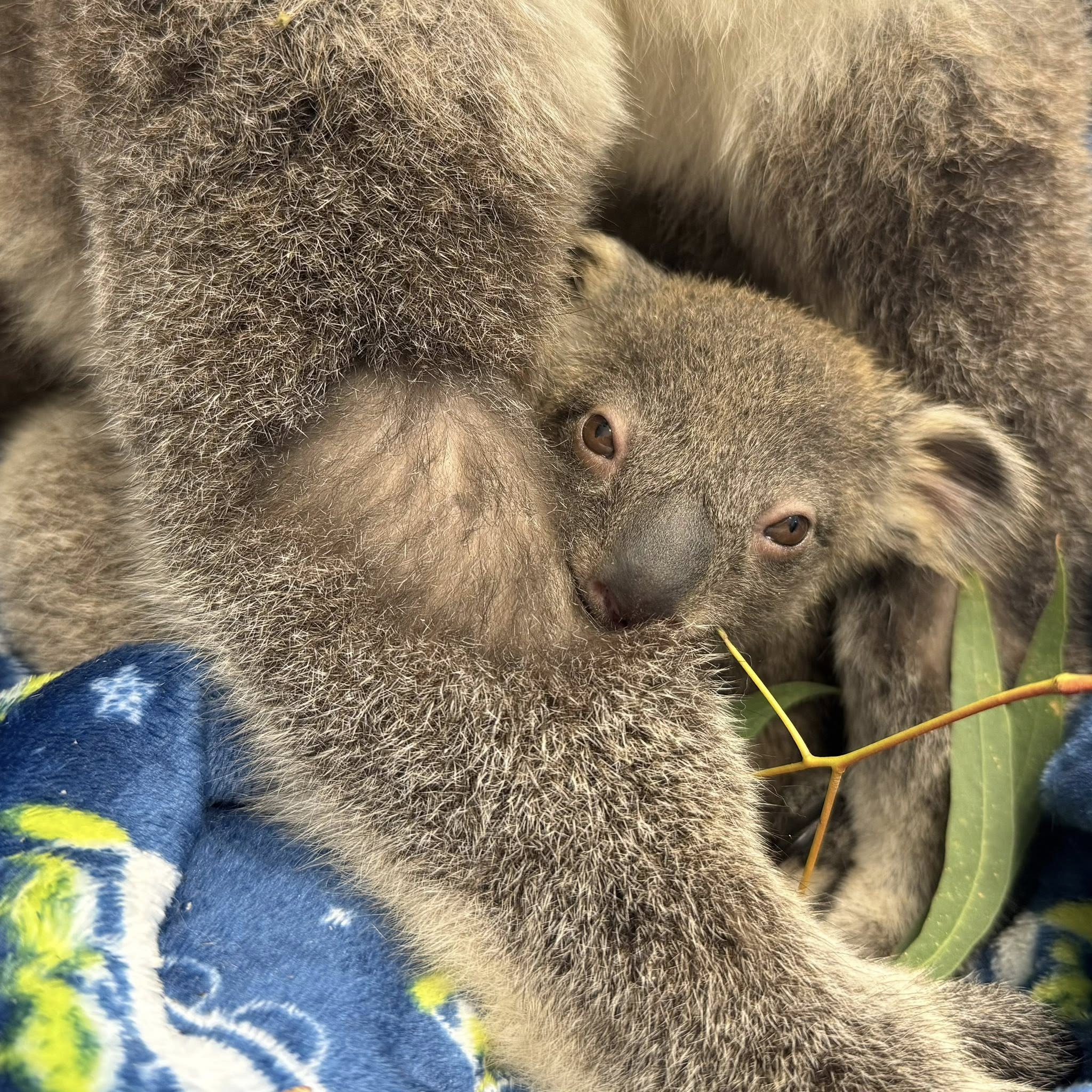
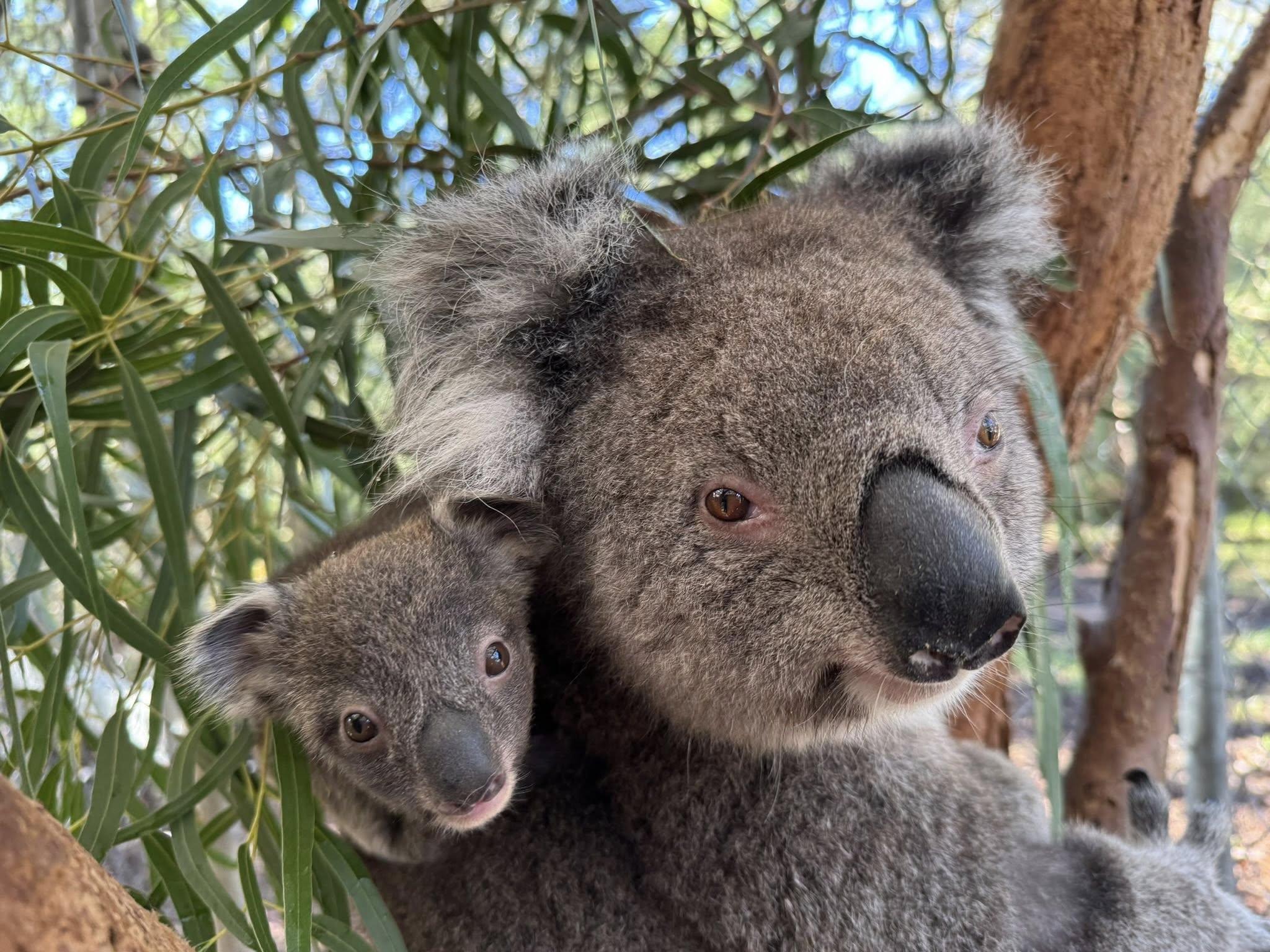
Koalas are one of Australia’s most recognised native animals. They live in eucalyptus forests and rely on leaf from specific trees for food and shelter. Raymond Island is home to a significant koala population, and many of the animals we care for at the shelter come from the local area. This page provides general information about koalas and how we support their health and wellbeing.
Koalas are marsupials that spend most of their time in trees. They sleep for long periods and feed mainly on eucalyptus leaves. Koalas are sensitive to changes in their environment and rely on healthy bushland to survive. Below is placeholder information that can be updated with details from the shelter.
Koalas are tree-dwelling marsupials, not bears, even though people often call them “koala bears.”
Their strong paws, rough pads, and sharp claws help them grip tree trunks and branches securely.
Koalas have unique fingerprints — just like humans — and no two are exactly the same.
Their thick, woolly fur protects them from cold, heat, and rain in the wild.
Koalas from southern Australia are usually bigger and heavier than those in the north.
Raymond Island is well known for its koala population. Many visitors come to the island to see koalas in the wild. The shelter often receives koalas that need help due to illness, injury or environmental stress. Below are placeholders that can be updated once the shelter provides more details.
Koalas mainly eat eucalyptus leaves, which make up nearly all of their diet — even though the leaves are tough, low in nutrients, and contain natural plant toxins. Their unique digestive system helps them process this difficult food.
In times of drought or high heat, koalas may come down from trees to drink free water — an important behaviour that helps them stay hydrated when leaf moisture isn’t enough.
Koalas often drink water from bowls or natural water on the ground, but they should never be given water by holding a bottle to their mouth because this can cause choking or water inhalation.
On very hot days, you may see a koala hugging a cool tree trunk to help lower its body temperature; this is a normal thermoregulation behaviour.
If a koala stays on the ground too long after drinking or shows unusual behaviour, it may need wildlife rescue support — do not try to handle it yourself.
Some koalas arrive at the shelter with health concerns that require treatment and monitoring. Volunteers care for these animals until they are strong enough to return to the wild. Below are placeholder topics that can be updated with accurate information.
Koalas are sometimes injured by dog attacks, which can cause serious puncture wounds and internal trauma, often requiring veterinary care.
Dog attacks contribute to a significant number of koala injuries and deaths, showing how critical responsible pet management is in koala habitats.
Chlamydia is a bacterial infection that can affect koala eyes, urinary tract, and reproductive organs, leading to pain, discomfort, “wet bottom,” and even infertility if untreated.
Koalas may show signs of chlamydial infection through inflamed eyes, stained fur around the rear, and changes in behaviour or mobility.
Heat and dehydration stress are health risks during hot weather; koalas may drink more water or struggle on the ground, which can indicate underlying strain or health concerns
Your interest helps protect and support the koalas on Raymond Island. You can learn more about helping our shelter through volunteering, donations or sponsorship.
Every act of kindness, large or small, helps protect the koalas of Raymond Island. We appreciate the ongoing generosity of our supporters and thank you for standing with us.
Rescuing, caring for and protecting the koalas that call Raymond Island home.
Our shelter is run by volunteers who help with feeding, cleaning, monitoring koalas, rescue transport and daily care tasks. Training is provided and all help is valued.
Copyright © 2026 KORI. All Rights Reserved